
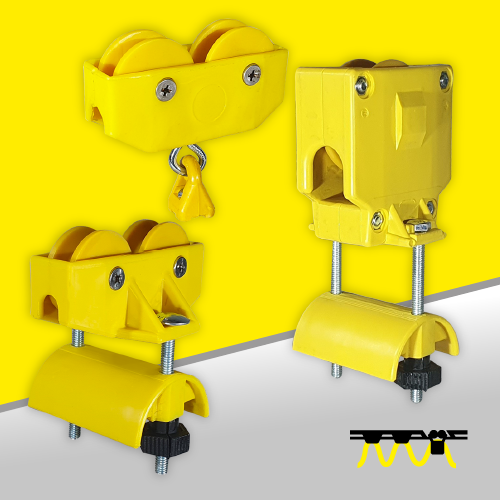
Our rope pulleys are designed to handle heavy-duty lifting and material handling with ease. Built tough for industrial applications, they ensure smooth, efficient, and safe performance every time.

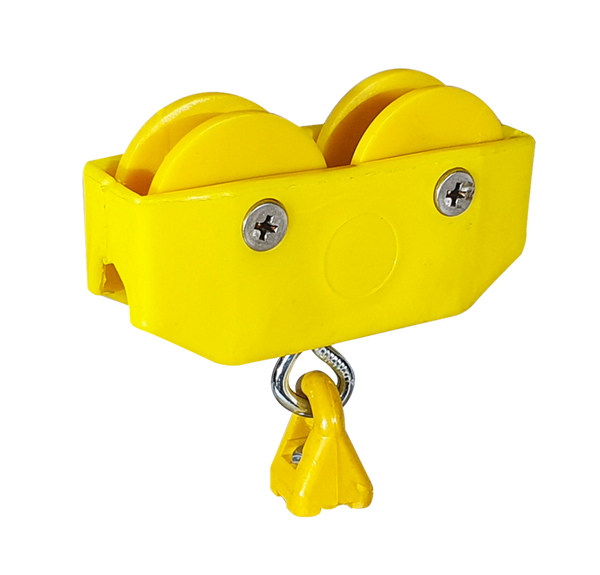
Keep rope movement organised with Powermite’s plastic rope pulleys for industrial material handling. When specifying plastic pulleys for industrial lifting, matching the component to the equipment and working conditions is essential. Our focus is on durable rope guidance that supports efficient operation within a correctly specified system.
Our rope pulleys are built for demanding industrial lifting and material handling applications. Designed for durability and smooth rope movement, they support efficient, reliable operation when correctly selected for the load and working conditions.
Whether your enquiry relates to a new equipment project or an existing installation, the right starting point is a clear understanding of the pulley’s role. Our plastic rope pulleys form part of our wider material handling offering, supporting customers who need components suited to their industrial requirements.
A rope pulley provides a guided path for a rope as it moves through an equipment assembly. The pulley’s rotating wheel and groove work with the rope to support the intended movement and direction of travel.
In industrial equipment, this interaction matters. The pulley, rope, mounting arrangement, and surrounding components must be compatible for the system to perform as intended. Smooth movement depends on the complete arrangement, rather than the pulley material alone.
Our plastic rope pulleys offer an option for applications where the specified product meets the equipment’s requirements. For lifting duties, the suitability of the particular component must be confirmed against its documented rating and intended use.
We approach product enquiries with this wider view in mind: what the component needs to do, how the equipment operates, and which specifications must be established before selection.
Rope movement is a small part of an industrial process, but it can have a significant effect on how the equipment operates. A pulley that is unsuitable for the rope or installation can introduce problems into an otherwise well-designed assembly.
A correctly matched pulley helps provide a defined route through the system. This supports orderly movement and helps avoid unnecessary contact between the rope and surrounding equipment.
For customers considering plastic pulleys for industrial lifting, the practical objectives include:
These objectives are relevant to both new installations and equipment already in service. They help keep the selection discussion focused on performance within the actual application.
The word “plastic” covers a broad range of materials with different properties. The performance of a pulley depends on its specific material, design, and construction, together with the demands placed on it.
This means that material choice should follow the application requirements. A pulley’s appearance or general product description cannot establish its load capacity, temperature suitability, or resistance to the substances present in a workplace.
The same principle applies when comparing plastic and metal components. Replacing one with the other requires a compatibility assessment; similar dimensions do not necessarily mean equivalent performance.
We encourage customers to discuss the intended duty and available equipment information so that the relevant product details can be considered.
A useful specification considers the whole assembly. The following information helps define the application and supports a more productive product enquiry.
Identify the machine or system in which the pulley will operate, together with the function it performs. Rope guidance, tensioning, and load-bearing duties can impose different requirements.
Where lifting is involved, the equipment manufacturer’s specification and the component’s documented suitability are essential reference points. A rope pulley should not be assumed to be approved for lifting solely because it can guide a rope.
The rope type and dimensions need to correspond with the pulley’s intended application. The groove and wheel geometry form part of this compatibility assessment.
For an existing installation, the original equipment details are particularly helpful. They provide a basis for identifying the correct component rather than relying on visual similarity.
Working conditions can vary considerably between an indoor workshop and equipment exposed to outdoor weather or process contaminants. Temperature, moisture, chemicals, and abrasive material may all be relevant to product suitability.
Sharing these details at the enquiry stage helps establish which material and product requirements need attention.
The frequency and nature of movement help define the operating duty. Equipment used occasionally may have different service demands from machinery operating repeatedly through a production shift.
If the equipment’s role has changed, that change should be included in the specification review. An existing component choice may need reassessment when operating conditions or duties are altered.
Replacing a worn or damaged component is an opportunity to confirm that the replacement matches the original design requirements. Accurate identification makes this process more straightforward.
Useful information includes the equipment make and model, the existing part reference, available drawings, and the pulley’s intended role. Photographs can help explain the arrangement, although they don’t replace dimensional information or product specifications.
Recurring wear also deserves attention at system level. The condition of the rope, mounting assembly, and surrounding equipment may be relevant to the cause. Reviewing the complete arrangement helps avoid treating repeated component damage as an isolated issue.
Durability and serviceability belong in the same conversation. A pulley arrangement should allow appropriately qualified personnel to assess its condition and carry out maintenance in accordance with the equipment guidance.
Keeping accurate component records also supports future maintenance work. Part references and equipment documentation help maintenance teams identify replacements and recognise when a proposed substitution needs further review.
For industrial businesses, this planned approach helps connect procurement decisions with the practical requirements of maintaining equipment over time.
Bring the component and the application together from the start. We supply plastic rope pulleys as part of our material handling range and welcome enquiries for new projects and replacement requirements.
If you are considering plastic pulleys for industrial lifting, share the equipment details, intended duty, rope specification, and working environment with our team. For existing installations, include any available part references or drawings to support the product discussion.
Contact Powermite to discuss plastic rope pulleys for your industrial material handling application and request the relevant product information.