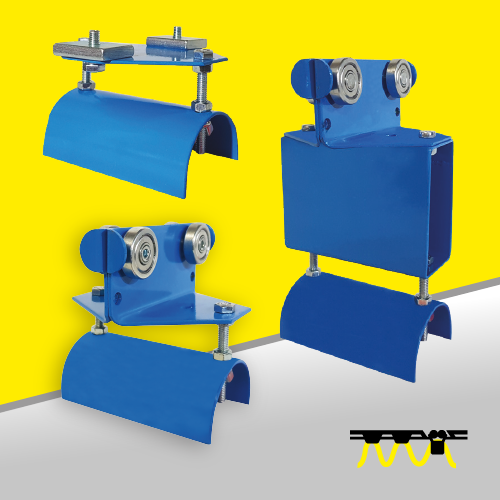
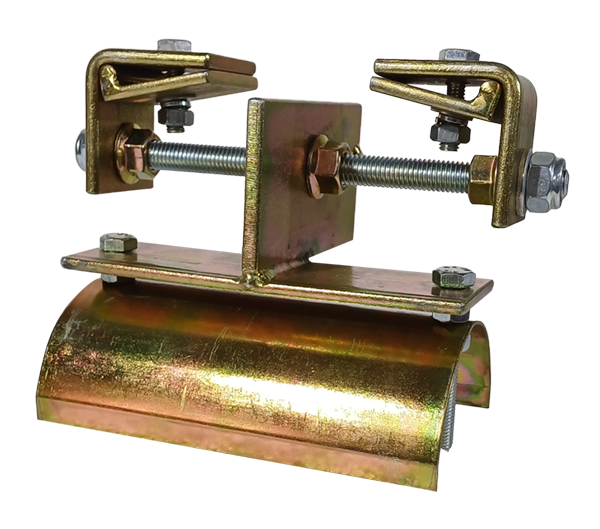
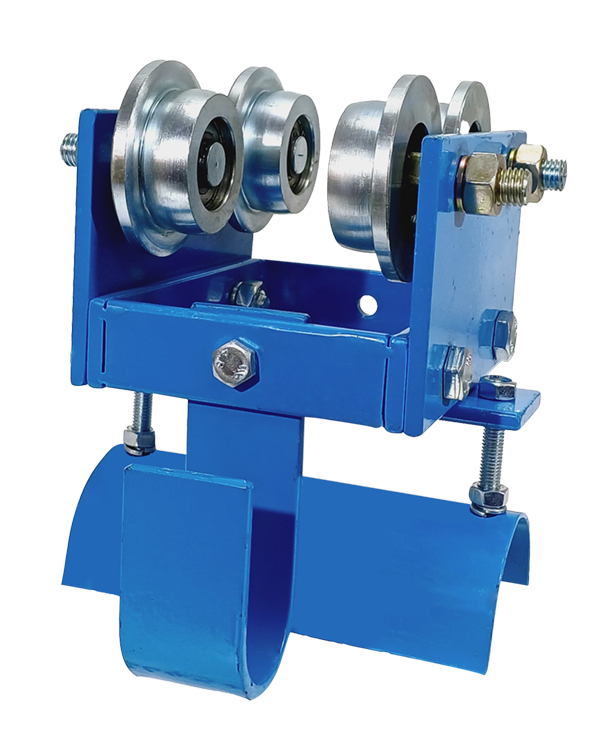
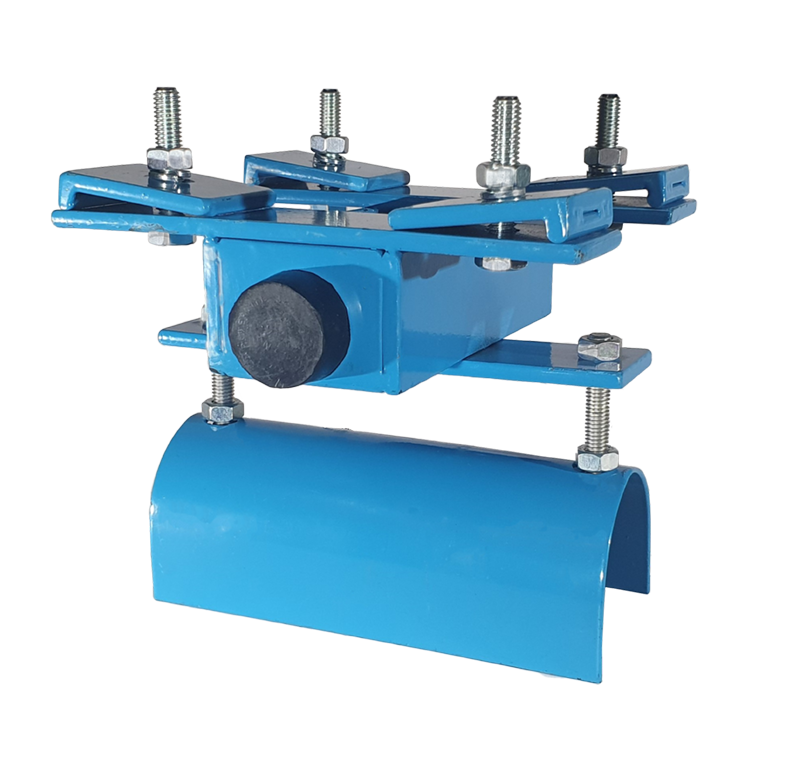
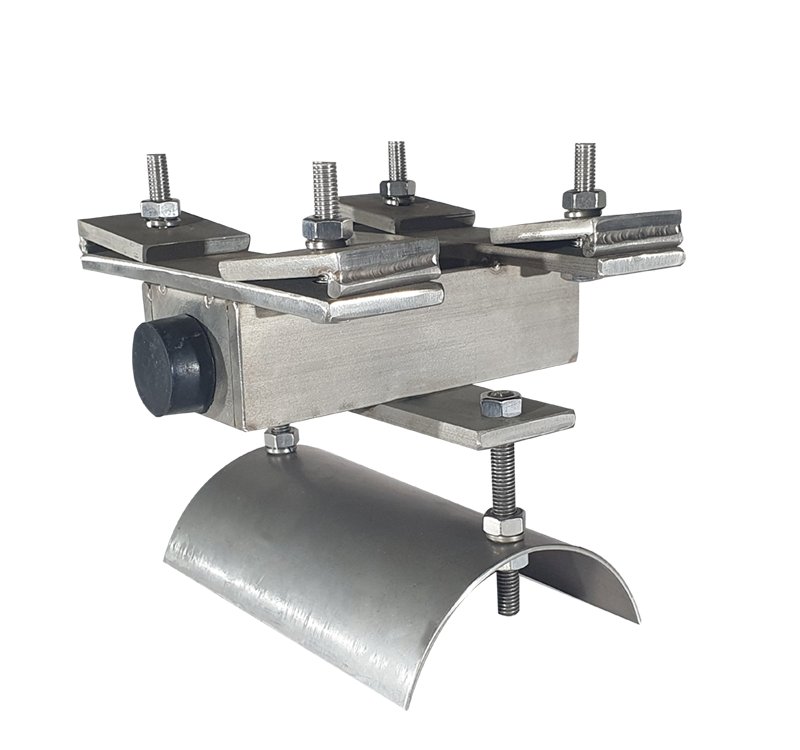
I-Beam Festoon Carriers for Overhead Cranes and Material Handling
Support moving cables with Powermite’s I-beam festoon carriers for overhead cranes and material handling equipment. Designed to travel smoothly along compatible I-beam tracks, these carriers keep cables suspended as machinery moves, providing an organised arrangement for flexible power delivery. Correct selection helps protect the cable package and supports dependable operation.
When production depends on moving equipment, cable management deserves the same attention as the machinery it serves. A suitable festoon arrangement gives power and control cables room to move while keeping them supported throughout the equipment’s travel.
Our I-beam festoon carriers form part of our material handling offering for industrial applications. Whether you are specifying a new system or reviewing an existing installation, the starting point is the relationship between the carrier, the beam, and the cables it needs to support.
Durable I Beam Festoon Systems for Reliable Crane Cable Management
An I-beam festoon system uses wheeled carriers to support cables in suspended loops. As the moving equipment travels, the carriers move along the beam, allowing the loops to extend or gather according to the machine’s position.
This arrangement accommodates movement while retaining a continuous cable connection between the supply and the equipment. The carriers provide mechanical support; the cables carry the power, control signals, or data.
Suitable I-beam festoon systems can accommodate flat or round cables, with the carrier and support arrangement selected for the cable package. A complete specification must account for the weight being carried, the beam profile, and the demands of repeated travel.
Durability comes from matching these elements properly. A robust carrier needs compatible running surfaces, appropriate loading, and a layout that allows the cables to move as intended.
Smooth Carrier Travel for Flexible Power Delivery
A festoon system should follow the equipment’s movement consistently. Carrier travel that is poorly matched to the track or operating conditions can place unnecessary demands on the cable arrangement.
Well-specified I-beam festoon carriers help provide:
- Guided movement: A defined route along the I-beam track
- Cable support: Suspension points for the moving cable package
- Organised travel: A planned arrangement for cables as the carriers spread out and collect
- Controlled bending: Cable loops designed around the flexibility and bending requirements of the selected cables
- Practical integration: A cable management layout coordinated with the surrounding machinery
Smooth operation depends on the complete assembly. Wheels, track condition, alignment, cable loading, and the towing arrangement all contribute to how the system behaves during use.
Cable Management for Overhead Cranes and Industrial Equipment
Overhead cranes move loads through workshops, production bays, and industrial facilities. Their electrical connections must accommodate this movement without interfering with nearby equipment or the working area.
I-beam festoon arrangements are an established option for crane cable management, including demanding industrial applications. The wider system type is used in environments such as steel production and port operations, where cable support must be matched to the machinery’s duty and surroundings.
For any installation, suitability should be assessed at the level of the individual movement. Crane bridge travel and trolley travel can have different requirements, and the most appropriate supply arrangement may differ between them.
Our focus is on helping you start with a clear application brief. Understanding where the equipment moves, what services it needs, and how frequently it operates provides the basis for discussing suitable product options.
Specify I-Beam Festoon Carriers Around Your Application
Choosing a carrier involves more than checking whether it fits onto a beam. The electrical, mechanical, and spatial requirements need to be considered together.
Beam Compatibility
The carrier must be suitable for the beam profile on which it will run. Relevant dimensions and flange geometry should be confirmed from the installation details, especially when replacing existing equipment.
An apparently similar carrier shouldn’t be assumed to be interchangeable. Accurate component identification helps avoid compatibility problems.
Cable Package and Loading
The number, dimensions, and combined weight of the cables influence carrier selection. The support arrangement also needs to suit the cable shape and the required movement.
A carrier’s cable load rating relates to the services it supports. It shouldn’t be confused with the crane’s lifting capacity, which is a separate specification.
Travel Distance and Storage Space
The system needs enough room for the required travel and for the carriers to collect at the parked end. This collected length is often called the storage or stacking length.
Space below the track matters too. Cable loop depth must be considered alongside obstructions, equipment clearances, and access requirements. Reviewing these details early helps prevent conflicts with the machine layout.
Speed and Operating Duty
Travel speed, acceleration, and frequency of movement affect the mechanical demands on the festoon assembly. A system supporting occasional movement may face different requirements from one operating repeatedly throughout a production shift.
The specified carrier arrangement should reflect the actual duty, including any planned changes to equipment operation.
Environmental Conditions
Dust, moisture, temperature, and corrosive exposure can influence component suitability. Outdoor installations may require additional consideration of wind and weather.
These conditions should form part of the selection discussion. A product suitable for one installation isn’t automatically suitable for another with different environmental demands.
Consider the Complete Festoon Assembly
Reliable performance depends on more than the individual cable carriers. Depending on the design, the assembly may include a towing trolley, fixed end clamp, cable supports, organisers, and associated connection components.
These elements need to work together with the track and cable package. Selecting them as a coordinated system helps establish how movement will be transferred through the assembly and how the cables will be supported.
For replacement enquiries, drawings and product references are especially useful. They help identify the existing arrangement and clarify which parts are being retained, replaced, or reviewed.
Plan for Maintenance and Long-Term Reliability
A festoon system is a moving assembly, so serviceability should be considered from the outset. Access for inspection, clear component records, and appropriate replacement parts all support maintenance planning.
Qualified personnel should assess the system in accordance with the relevant manufacturer and equipment guidance. Carrier wheels, cable supports, fastenings, and the cables themselves are among the components whose condition can affect operation.
Where recurring wear or cable damage occurs, the complete installation deserves attention. Replacing a damaged part may not resolve an underlying issue with alignment, loading, clearance, or changed operating requirements.
Reviewing I-beam festoon carriers during a crane upgrade is also an opportunity to check whether the original cable management arrangement remains appropriate for the equipment’s current role.
Discuss Your I-Beam Festoon Carrier Requirements with Powermite
Give moving cables the support they need with an arrangement suited to your equipment. Share your beam details, cable package, travel distance, operating duty, and environmental conditions with our team. For an existing installation, include available drawings and component references to support the compatibility review.
Contact Powermite to discuss your I-beam festoon system requirements and request a quotation for your application.