Energy Drag Chain Systems for Industrial Cranes and Material Handling
Keep cables and hoses supported as your equipment moves. Powermite’s energy drag chains offering addresses the cable management needs of industrial cranes and material handling machinery. A correctly specified system guides moving services along a controlled path, helping limit unnecessary strain and supporting reliable operation through repeated movement.
Cables and hoses are essential connections between a machine and the power, signals, or fluids it needs. Giving those connections the right support is an important part of equipment design, particularly where movement is frequent and production depends on consistent performance.
Whether you are planning a new installation or reviewing an existing arrangement, consider the chain, its contents, and the machine’s travel as one system.
Durable Energy Drag Chains for Reliable Cable and Hose Management
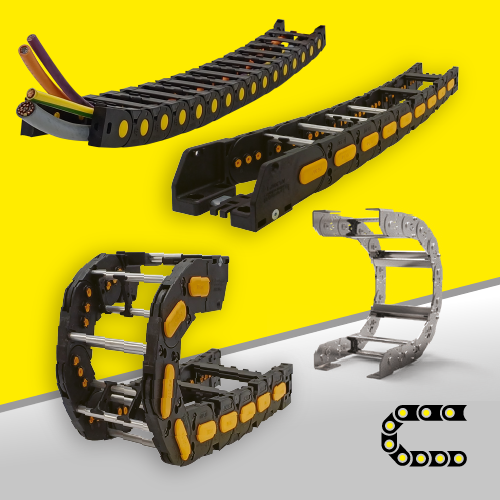
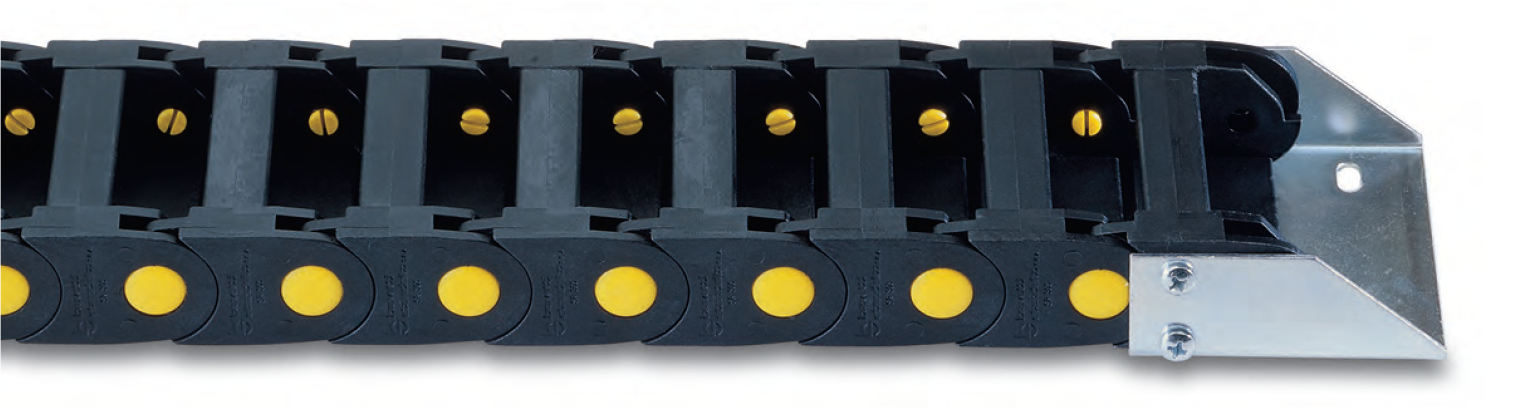
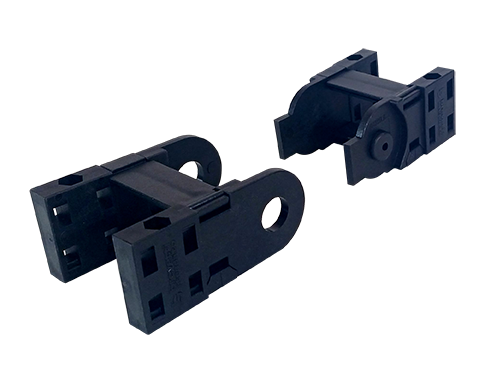
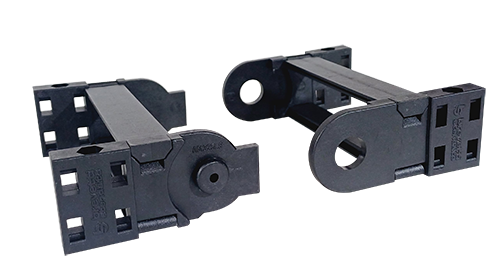
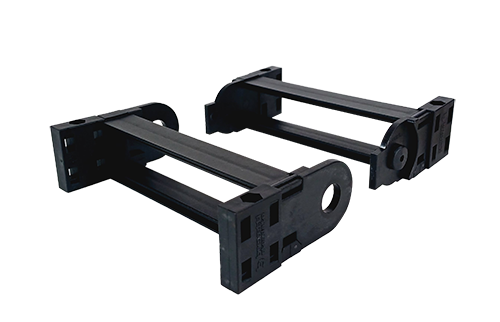
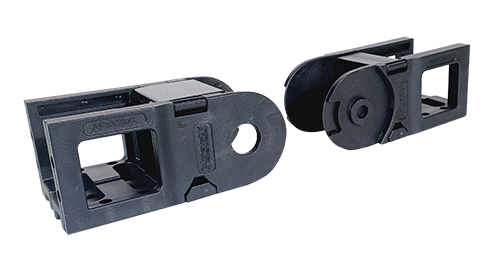
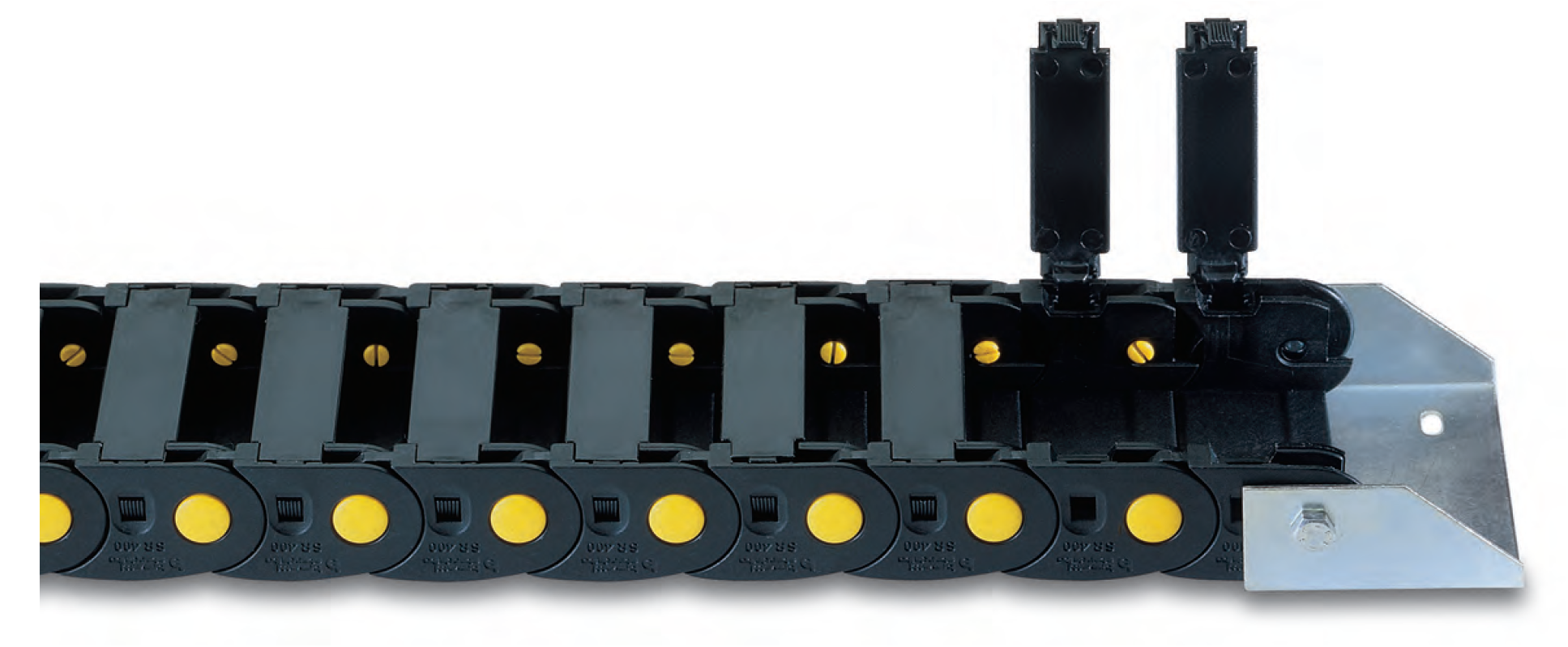
Energy drag chains, also known as cable carriers, guide cables and hoses between fixed and moving parts of a machine. Their linked construction allows them to bend along a defined path as the equipment travels.
The chain provides mechanical guidance; the cables and hoses inside it carry the electrical supply, communications, or fluid services. This distinction matters when specifying the system. A suitable carrier must be paired with cables and hoses designed for the movement involved.
Depending on the application, a carrier may accommodate power cables, control cables, data cables, and suitable pneumatic or hydraulic hoses. The complete package needs to be assessed for compatibility, space, weight, and flexibility.
We encourage customers to look beyond the chain’s external dimensions. Reliable cable and hose management begins with understanding what the system must carry and how it will move.
Give Moving Services a Defined Route
On moving machinery, unmanaged cables and hoses can interfere with surrounding structures or experience avoidable bending and abrasion. An appropriate carrier arrangement helps keep these services organised throughout the intended travel.
This is particularly useful where several services need to follow the same moving component. Bringing them into a planned arrangement makes cable management part of the machine layout, rather than an afterthought.
The benefits of a well-specified system can include:
- A consistent route for moving cables and hoses.
- Better control of bending during repeated travel.
- Reduced exposure to avoidable snagging and contact with nearby structures.
- An organised arrangement that supports inspection and maintenance planning.
- Clearer provision for the space occupied by moving services.
Performance depends on the selected chain, the installation, and the operating conditions. The goal is to address the causes of unnecessary wear while preserving the movement the equipment requires.
Cable Management for Cranes and Material Handling Equipment
Industrial equipment often combines several kinds of movement. A crane may travel along a runway while its trolley moves across the bridge. A handling machine may transfer components between fixed positions throughout a production shift.
Each movement creates its own cable management requirements. The travel distance, available space, and services needed at the moving component should determine whether an energy drag chain is appropriate for that part of the machine.
For a new project, assessing these requirements early helps coordinate the carrier route with structural components, guards, and other equipment. For an upgrade, the same assessment helps establish whether the existing space and mounting arrangement suit the proposed change.
Our energy drag chains category forms part of our material handling offering for customers planning these industrial applications. Speak to us about the equipment and operating requirements so the relevant product options can be discussed.
Choosing Energy Drag Chains for Your Application
A successful specification starts with the working conditions. Two machines with similar travel distances may need different arrangements because their cable packages, speeds, or surroundings differ.
Cable and Hose Requirements
Prepare a complete picture of the services the machine needs. The number of cables and hoses, their outside dimensions, their weight, and their movement requirements all affect selection.
Future additions also deserve consideration. Extra services may change the demands on the carrier, so spare capacity should be assessed as part of the design rather than assumed.
Bending Requirements
The carrier’s bend radius must be compatible with the cables and hoses it contains. A cable that fits inside the chain may still be unsuitable if it cannot tolerate the required repeated bending.
Product documentation for both the carrier and its contents should inform the assessment. This is especially important when replacing a cable with a different type or adding a hose to an existing arrangement.
Travel and Operating Duty
The system must suit the machine’s travel distance, orientation, speed, and acceleration. The frequency of movement matters too: an occasional positioning task creates a different operating pattern from continuous production cycling.
These details help establish the demands that the complete carrier arrangement will face in service.
Installation Space
Available height, width, and clearance can influence the choice of system. The assessment should consider the space occupied throughout the movement, together with access for inspection and planned maintenance.
A layout drawing is particularly useful when cable management must fit around an established machine or building structure.
Environmental Exposure
Dust, moisture, oils, chemicals, and temperature can affect material suitability. Outdoor exposure may introduce further requirements.
These conditions should be identified before a product is selected. Protection requirements differ between applications, and suitability for one environment should not be assumed to apply to another.
Consider the Complete Carrier Assembly
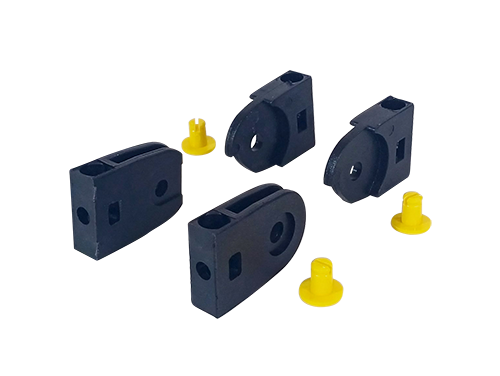
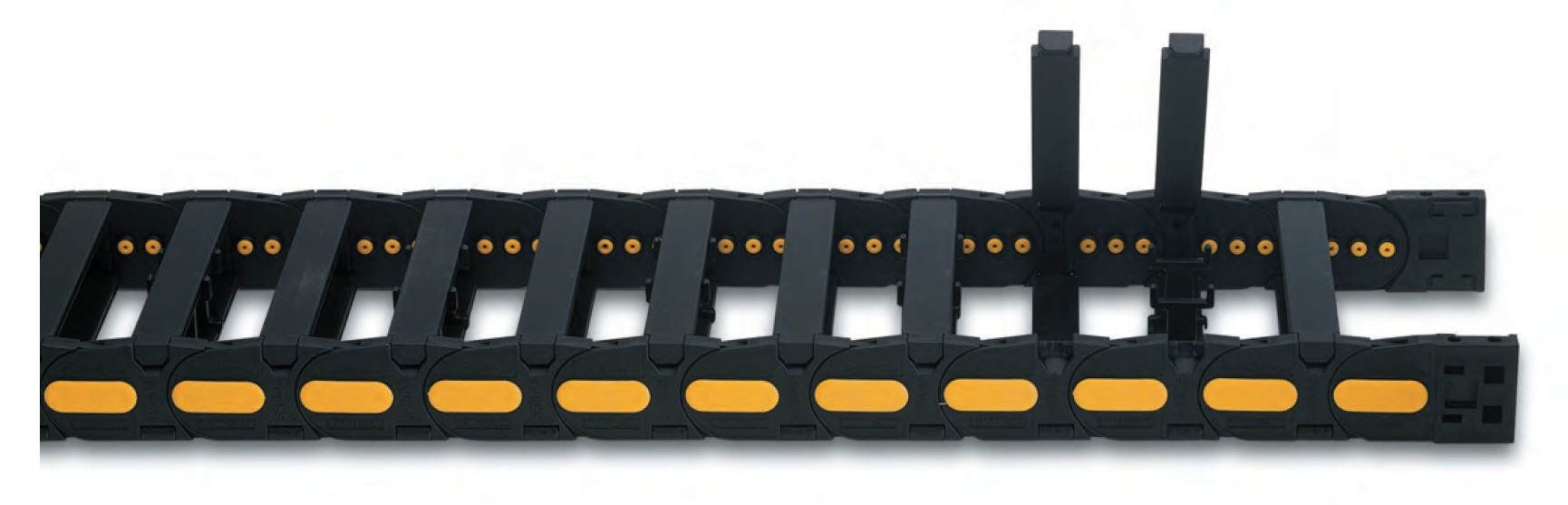
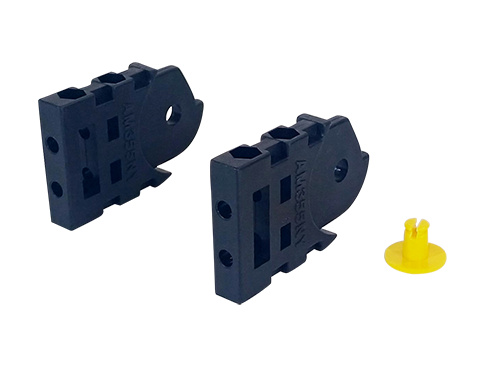
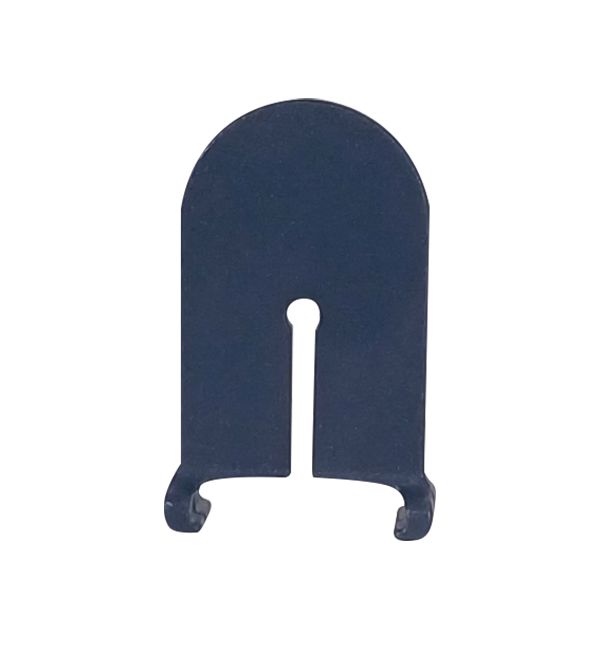
The chain itself is only part of the arrangement. Depending on the selected design, the system may also require internal separators, mounting brackets, strain relief components, and a guide or support arrangement.
Internal organisation helps manage the relationship between the cables and hoses as they move. Suitable mounting and strain relief are also part of protecting the connections at the ends of the travel.
When reviewing product options, consider these components together. Compatibility should be confirmed for the selected system, particularly where existing parts are being retained.
This approach is valuable during maintenance procurement as well. A replacement link or accessory should be identified by its correct specification, rather than selected on appearance alone.
Plan for Long-Term Serviceability
A durable installation should also be practical to maintain. Access, component identification, and clear equipment records help maintenance teams plan their work and source appropriate replacements.
Periodic assessment by qualified personnel can identify wear, damage, contamination, or changes in how the carrier moves. Inspection requirements should follow the relevant equipment and component guidance.
If cables repeatedly fail in the same area, reviewing the whole arrangement is more useful than treating each failure as an isolated event. Changes in operating duty, cable suitability, internal loading, or surrounding equipment may need to be considered.
For existing energy drag chains, an upgrade is also an opportunity to review whether the original specification still matches the machine’s current role.
Discuss Your Energy Drag Chain Requirements with Powermite
Choose cable and hose management with the complete application in mind. We welcome enquiries for energy drag chains for industrial cranes, material handling projects, and moving machinery.
To start the discussion, share the equipment type, travel requirements, cable and hose details, available space, and operating environment. For replacement enquiries, include the existing chain identification and any available drawings or component references.
Contact Powermite to discuss a suitable energy drag chain system and request a quotation for your application.